From paper routes to fighter jets: Shield AI’s bet on Seattle is a homecoming for its co-founders
Shield AI co-founder Brandon Tseng, who spent part of his childhood on Mercer Island, says he believes the defense tech company will become one of the fastest-growing, employers in the Seattle region over the next several years, as it buys radar maker Echodyne for up to $5.3 billion and prepares to build its X-BAT fighter jet south of Seattle. Read More


As a kid on Mercer Island, Brandon Tseng delivered The Seattle Times and the Mercer Island Reporter for extra cash. Now he and his older brother, Ryan Tseng, are making news of their own in the Seattle region.
Shield AI, the San Diego defense tech company the brothers co-founded in 2015, announced a deal last week to buy Kirkland, Wash.-based radar maker Echodyne for up to $5.3 billion. Shield, now valued at $28.8 billion, had already unveiled plans in September to build its AI-piloted X-BAT fighter jet at a factory south of Seattle.
“I believe we will become one of the largest, or at least the fastest-growing employer in this region over the next several years,” Brandon Tseng said in an interview with GeekWire in the hours after the Echodyne acquisition was announced.
The company projects that it will employ about 4,000 people in the Seattle area by the early 2030s. It estimates the X-BAT could support about 8,000 jobs across the region in all, including jobs at Shield and its suppliers, according to an economic analysis drawing on company figures.
Tseng said Shield expects to have “well north of a million square feet” in the area before long, up from its initial 420,000-square-foot facility in Des Moines, Wash.
“That will really just be the beginning,” he said.
Brandon Tseng said the biggest reason Shield chose the Pacific Northwest for X-BAT production was the region’s “density of engineering and manufacturing talent,” pointing to Boeing, Microsoft and Amazon.
Inside the Echodyne deal: Shield believes the defense tech companies that succeed will need products that “sense, think, and act,” Tseng said. Its Hivemind autonomy software handles the thinking, and its V-BAT drone and X-BAT jet will handle the acting.
Echodyne becomes “the cornerstone of the sensing piece,” he said.
Tseng said Shield got a closer look at the market for sensors when it bought Australian optics company Sentient Vision Systems in 2024. That led the company to start looking seriously at other sensor makers, and eventually to Echodyne.
Shield and Echodyne had first crossed paths in 2016, when both were fledgling companies in the Department of Homeland Security’s Silicon Valley Innovation Program.
Nearly a decade later, the two companies’ teams were talking about working together when Echodyne began exploring a sale, Tseng said. The deal came together over several months. Tseng was at Echodyne the day it was announced last week, as the companies held all-hands meetings with their teams.
It’s an unusual deal: one venture-backed startup buying another, funded in part by a new venture round. Shield is raising $2.5 billion to help pay for the deal, including $1 billion in new funding at the $28.8 billion valuation — more than double what it was worth in March.
Echodyne has about 400 employees, after opening a $40 million radar factory in Woodinville in July. No layoffs are planned, the companies said. Eben Frankenberg, Echodyne’s co-founder and CEO, will stay in that role, reporting to Shield CEO Gary Steele. The combined company will have about 2,700 employees.

The deal is expected to close in early 2027, pending regulatory approval. Tseng said Shield plans a light touch for roughly the first year after that. Echodyne will keep selling radar to other manufacturers, many of them in counter-drone systems, while pursuing performance targets that could add $500 million to the price.
Deeper product integrations will be announced later, he said.
“They’ve been on a tear growth-wise, and we don’t want to get in their way,” Tseng said. “We don’t want to slow them down. We just want to supercharge them.”
He called the two companies’ cultures a strong match, describing both as mission-oriented and engineering-first. Echodyne’s best-selling radar, EchoShield, is designed to protect U.S. and allied service members from incoming drones.
Echodyne spun out of Intellectual Ventures, the Bellevue invention lab, in 2014 with a $15 million round led by Bill Gates and Madrona. Madrona and other Echodyne investors will become significant Shield shareholders.
Tim Porter, the Madrona Venture Group managing director who has served on Echodyne’s board since 2014, called the deal another sign of the defense tech industry’s rapid growth in the Pacific Northwest.
Echodyne “rarely, if ever, showed up on lists of the hottest defense tech companies,” he wrote. Now it’s “under the radar no longer.”
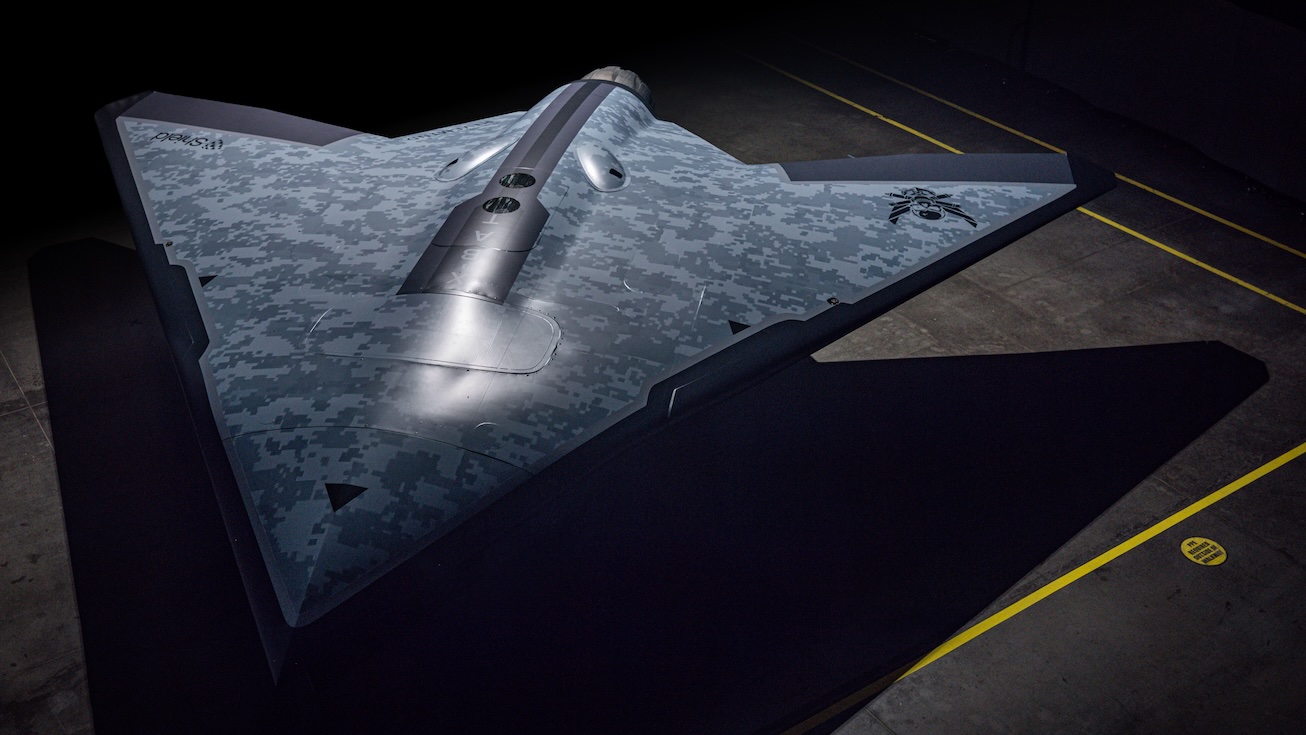
X-BAT bet: Much of Shield’s growth in the region depends on an aircraft that hasn’t flown yet. Shield unveiled its first full-scale X-BAT prototype this month and shipped it to Kansas for flight testing, with first flight targeted by the end of the year. Shield has said low-rate production will start in Des Moines in mid-2027, with the first locally built jet due in early 2028.
The Pentagon and Shield have committed a combined $400 million to X-BAT’s development, but Shield hasn’t announced any production orders.
Ryan Tseng, speaking to Breaking Defense on the sidelines of the International Fighter Conference in Munich last week, said Shield expects to announce European X-BAT orders and partnerships but declined to discuss quantities, saying only, “Watch this space.” Andrew Hawkes, Shield’s X-BAT director for Europe, told Breaking Defense the company has “several active” sales campaigns there but declined to name customers.
Asked about the X-BAT schedule in the interview last week, Brandon Tseng acknowledged the challenge but pointed to the engineering and manufacturing teams that brought the prototype together in about a year. “There was no quit in them,” he said.
“It’s hard as hell, right? Just to move out on production that fast, but you have to be confident,” he said. “I’m confident.”
Tseng, a Naval Academy graduate who deployed twice to Afghanistan as a Navy SEAL, compared Shield’s pace to that experience, when small, mission-driven groups with the right tools and resources would “do things that people didn’t think were possible.”

Ryan Tseng, an electrical engineer, previously founded wireless charging company WiPower, which was acquired by Qualcomm. The brothers started Shield with Andrew Reiter, Shield’s first CTO, who returned to the company this year.
Seattle roots: The Tseng brothers and their sister grew up on Mercer Island. Brandon Tseng spent summers swimming in Lake Washington and played water polo for Mercer Island. Ryan Tseng, who was Shield’s CEO for about a decade, graduated from Mercer Island High School, and their sister graduated from the University of Washington.
Their father, Carlos Tseng, was CEO of Seattle-based Foss Maritime from 1996 to 2001, according to Tseng and Shield. He would stop at Pike Place Market on the way home from work, and the family “probably ate salmon every other day,” Brandon Tseng said.
The family moved to Florida in 2001. None of the Tsengs live in the area anymore, but Brandon Tseng still has friends here from middle school and high school and stops by Mercer Island when he has time on his visits to the region.
Shield’s Washington state connections go further. Steele, the company’s CEO since May 2025, grew up in Yakima and graduated from Washington State University.
Brandon Tseng called Shield’s expansion in the region “a fun homecoming” for him, his brother and Steele. He is based in Washington, D.C., but expects to spend more and more time in the Seattle area.
Tseng delivered the Times, then the afternoon paper, seven days a week from age 10 to 14, making his rounds every day after school and on weekends. He credits those routes with teaching him about hard work.
“It’s always felt like home,” he said. “It’s great to be back here.”